
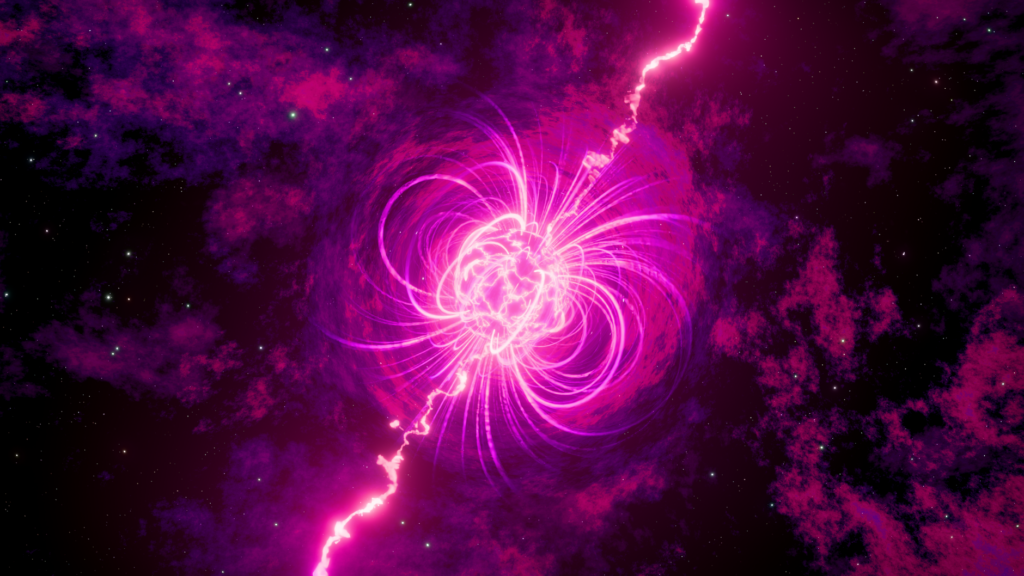
In this article you will explore the essential ideas of magnetism and matter, then move on to quantum‑level explanations, cutting‑edge materials, and real‑world applications that go beyond the NCERT text. By the end, you will be ready to tackle higher‑order NEET questions and understand how modern research builds on the concepts you learn in class.
Core Ideas in Magnetism and Matter
Magnetic dipole moment and its origin
The magnetic dipole moment μ of a current loop or an electron arises from moving charge. For a planar loop of area A carrying current I, μ = I·A, directed perpendicular to the plane (right‑hand rule). In atoms, the dipole moment is the vector sum of electron spin and orbital contributions.
Magnetisation (M) and the B‑H relationship
Magnetisation M is the magnetic moment per unit volume. It links the magnetic field B and the magnetic field intensity H through the relation B = μ₀(H + M). In linear, isotropic media, M = χₘH, where χₘ is the magnetic susceptibility. The distinction between B (the total field) and H (the applied field) often confuses students, but remembering that B includes the response of the material helps keep them separate.
Magnetic susceptibility and permeability
Materials are classified by χₘ:
- Diamagnetic (χₘ < 0): induced moments oppose H; e.g., bismuth.
- Paramagnetic (χₘ > 0, small): moments align weakly with H; e.g., aluminium.
- Ferromagnetic (χₘ ≫ 0): strong alignment, permanent magnetisation.
The relative permeability μᵣ = 1 + χₘ quantifies how much a material amplifies B compared with free space.
Magnetic domains and hysteresis
In ferromagnets, atomic moments group into domains where they are parallel. External fields cause domain walls to shift, producing the characteristic hysteresis loop. The coercive field (Hc) and retentivity (Mr) are key parameters for permanent magnets and are directly measured in laboratory setups.
Quantum Foundations and Advanced Theories
Electron spin, orbital angular momentum, and total magnetic moment
Quantum mechanics tells us that each electron carries an intrinsic spin of ½ħ, giving a magnetic moment μₛ = -gₛμ_BS, where μ_B is the Bohr magneton and gₛ ≈ 2. Orbital motion contributes μₗ = -μ_BL. The total moment is the vector sum μ = μₗ + μₛ, and the relative sign determines whether the material is paramagnetic or diamagnetic.
Exchange interaction and the origin of ferromagnetism
The parallel alignment of spins in ferromagnets is not due to classical magnetic dipole forces (which are too weak). Instead, the exchange interaction—a quantum effect arising from the Pauli exclusion principle—lowers the energy when neighboring electron spins are parallel. This interaction is quantified by the exchange integral J; J > 0 favours ferromagnetism, while J < 0 leads to antiferromagnetism.
Band theory of magnetism
In solids, electrons occupy energy bands. When the density of states at the Fermi level is high, Stoner’s criterion (I·D(E_F) > 1) predicts spontaneous spin polarisation, giving rise to itinerant ferromagnetism as seen in iron, cobalt, and nickel. The band picture also explains why some alloys become ferrimagnetic—different sublattices possess unequal magnetic moments that partially cancel.
Curie–Weiss law and critical temperatures
Above the Curie temperature (T_C) ferromagnets behave as paramagnets, obeying the Curie–Weiss law: χ = C/(T – θ), where C is the Curie constant and θ ≈ T_C. Plotting 1/χ versus T yields a straight line, a technique frequently used in NEET‑level experiments to estimate T_C from laboratory data.
Emerging Magnetic Materials and Phenomena
Giant magnetoresistance (GMR) and spin‑valve structures
When alternating layers of ferromagnetic and non‑magnetic metals are stacked, the electrical resistance depends on the relative alignment of the magnetic layers. Parallel alignment yields low resistance, antiparallel yields high resistance—this is the giant magnetoresistance effect. GMR forms the basis of modern hard‑disk read heads and has spurred the field of spintronics.
Spin‑Hall and inverse spin‑Hall effects
Charge currents in heavy metals with strong spin‑orbit coupling generate transverse spin currents (spin‑Hall effect). Conversely, spin currents can produce charge voltages (inverse spin‑Hall). These phenomena enable the electrical detection of spin dynamics without ferromagnetic contacts, a promising route for low‑power memory devices.
Multiferroics and magnetoelectric coupling
Multiferroic materials exhibit simultaneous ferroelectric and magnetic ordering, allowing electric fields to control magnetisation and vice‑versa. BiFeO₃ is a widely studied example. The coupling opens possibilities for energy‑efficient data storage where a voltage, rather than a magnetic field, switches bits.
Magnetic nanoparticles and superparamagnetism
When ferromagnetic particles shrink below ~10 nm, thermal energy can randomly flip their magnetisation, leading to superparamagnetism. The blocking temperature (T_B) marks the transition between stable and fluctuating moments. Superparamagnetic iron oxide nanoparticles (SPIONs) are used in targeted drug delivery and magnetic hyperthermia for cancer treatment.
From Lab to Industry: Applications and Research Frontiers
Data storage and magnetic random‑access memory (MRAM)
Beyond hard‑disk GMR, tunnelling magnetoresistance (TMR) in magnetic tunnel junctions provides higher read‑out signals, forming the core of MRAM. MRAM combines non‑volatility with fast write times, positioning it as a potential universal memory.
Magnetic resonance imaging (MRI)
Clinical MRI exploits the nuclear spin of hydrogen protons. Aligning these spins in a strong static field (typically 1.5–3 T) and perturbing them with radio‑frequency pulses produces detectable signals. Advances such as functional MRI map brain activity by measuring local changes in blood oxygenation.
Magnetic refrigeration based on the magnetocaloric effect
When a ferromagnet is magnetised adiabatically, its temperature rises; demagnetisation cools it. Materials like Gd₅(Si₂Ge₂) exhibit a large magnetocaloric effect near room temperature, offering an eco‑friendly alternative to conventional vapor‑compression refrigeration.
Quantum computing with spin qubits
Electron or nuclear spins in quantum dots, nitrogen‑vacancy centres in diamond, and donor impurities in silicon serve as qubits. Coherent manipulation of spin states using microwave pulses enables gate operations, while magnetic fields provide the necessary Zeeman splitting for qubit addressability.
Common Misconceptions and NEET‑Level Problem Solving
Misconception 1: “Magnetic field lines are physical objects.”
Field lines are a visual tool representing the direction of B. They do not exist as tangible entities; the field itself is a vector quantity defined at every point in space. In calculations, treat B as a continuous function, not as discrete lines.
Misconception 2: “All metals are ferromagnetic.”
Only a few transition metals (Fe, Co, Ni) and some alloys show ferromagnetism. Most metals, like copper or silver, are diamagnetic because their electron shells are completely filled, leading to induced moments that oppose the applied field.
Higher‑order reasoning example
Consider a long cylindrical rod of a ferromagnetic material of length L and cross‑sectional area A, placed in a uniform magnetic field H₀ along its axis. The rod is heated uniformly from one end, creating a temperature gradient dT/dx. Using the Curie–Weiss law, derive an expression for the spatial variation of magnetisation M(x) along the rod, assuming the temperature stays below T_C everywhere.
Solution outline:
- Write the local temperature as T(x) = T₁ + (dT/dx)·x.
- Apply Curie–Weiss: χ(x) = C/[T(x) – θ].
- Since B = μ₀[H₀ + M(x)] and H₀ is constant, M(x) = χ(x)·H₀.
- Thus M(x) = (C·H₀)/[T₁ + (dT/dx)·x – θ].
This type of question tests your ability to blend thermodynamics with magnetic susceptibility, a skill often examined in NEET‑level problem sets.
Important Questions for NEET and Boards
- Define magnetic dipole moment and give its SI unit.
- Explain the difference between magnetic field B and magnetic field intensity H, and write the relation connecting them in a linear medium.
- Derive the expression for the force on a magnetic dipole placed in a non‑uniform magnetic field.
- Using the Curie–Weiss law, calculate the Curie temperature of a material whose susceptibility at 400 K is 0.012 and at 500 K is 0.008.
- State Stoner’s criterion for itinerant ferromagnetism and discuss why it is satisfied for iron.
- Describe the working principle of a spin‑valve device and how giant magnetoresistance is measured.
- What is superparamagnetism? Explain why the hysteresis loop of a superparamagnetic nanoparticle disappears at temperatures above the blocking temperature.
- Outline the magnetocaloric effect and derive the expression for the adiabatic temperature change ΔT_ad in terms of the magnetic entropy change ΔS_m.
- Compare and contrast ferromagnetism and ferrimagnetism in a tabular form.
- Discuss how magnetic resonance imaging utilizes the concept of nuclear spin and why a higher static magnetic field improves image resolution.
Frequently Asked Questions
Why does a diamagnetic material develop a magnetic moment opposite to the applied field?
When an external field is applied, the orbital motion of electrons slightly adjusts, creating an induced magnetic moment that opposes the change, in accordance with Lenz’s law. This induced moment is extremely weak, which is why diamagnetism is often overlooked.
Can a non‑magnetic material become magnetic under extreme conditions?
Yes. Applying very high pressures or strong magnetic fields can alter electronic band structures, causing a transition to a magnetic state. For example, lithium becomes superconducting and shows magnetic ordering under megabar pressures.
How does temperature affect the coercivity of a permanent magnet?
Coercivity generally decreases with rising temperature because thermal agitation assists domain wall motion. Near the Curie temperature, coercivity drops sharply to zero as the material loses its long‑range magnetic order.
Is the magnetic field inside a solenoid uniform?
Ideally, a long solenoid with closely spaced turns produces a uniform magnetic field along its axis, given by B = μ₀nI, where n is the turn density. Edge effects cause slight non‑uniformity near the ends, which can be ignored for sufficiently long solenoids.
Key Takeaways
- Magnetisation M links the applied field H to the total field B through B = μ₀(H + M).
- Quantum exchange interaction, not classical dipole forces, is the root cause of ferromagnetism.
- Curie–Weiss law and Stoner’s criterion connect macroscopic susceptibility to microscopic electron behaviour.
- Advanced phenomena such as GMR, spin‑Hall effect, and magnetocaloric effect drive modern technologies.
- Understanding domain dynamics and hysteresis is essential for designing permanent magnets and magnetic memory.
- Common misconceptions—field lines as objects and all metals being magnetic—must be cleared to avoid errors in problem solving.
- Higher‑order NEET questions often require integrating thermodynamics, quantum concepts, and material properties, so practice derivations and conceptual links.