
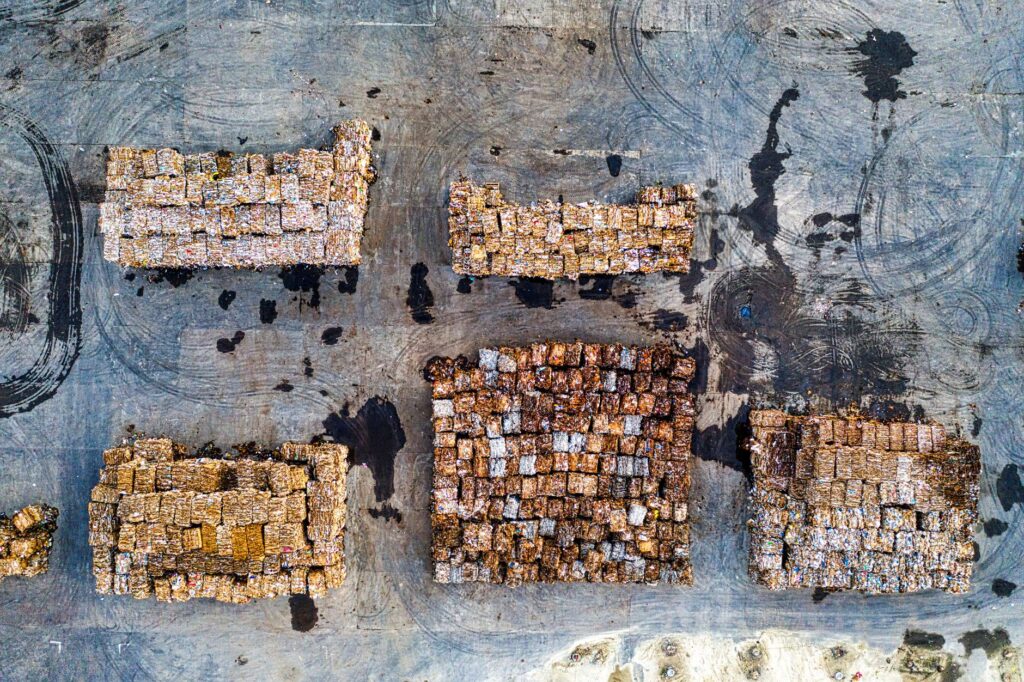
In this article you will discover how a recent chemical recycling method converts stubborn silicone waste into a valuable monomer with almost quantitative yield. The discussion ties the breakthrough to NCERT chapters on polymers, silicon chemistry, and green chemistry, and shows how you can use this knowledge for NEET and board examinations.
1. The Challenge of Silicone Waste
1.1 What makes silicones unique?
Silicones are organosilicon polymers that contain a backbone of alternating silicon and oxygen atoms (Si–O–Si). Each silicon atom is also bonded to organic groups such as methyl (‑CH₃), giving the polymer its characteristic flexibility, thermal stability and resistance to chemicals. These properties are described in the NCERT Class 11 chapter “Silicon and its Compounds” and the Class 12 “Polymers” chapter.
1.2 Why recycling has been difficult
The same Si–O bond that endows silicones with durability is also chemically inert under ordinary conditions. Conventional waste‑treatment methods—incineration, landfilling or mechanical shredding—either destroy the material’s value or release hazardous by‑products. Consequently, large volumes of silicone from medical devices, sealants and cookware accumulate as persistent waste.
1.3 Environmental and economic implications
- Silicone production consumes silicon, a resource that requires energy‑intensive reduction of silica.
- Discarded silicone does not biodegrade, contributing to long‑term landfill load.
- Recovering the original monomer could close the material loop, aligning with the principles of green chemistry.
2. Chemistry of Silicone Polymers and Their Depolymerisation
2.1 Structure of the polymer
The repeating unit of a typical silicone polymer can be written as –[SiR₂–O]ₙ–, where R is usually a methyl group. The Si–C bonds are relatively strong, but the Si–O bond (≈452 kJ mol⁻¹) is one of the strongest single bonds in chemistry, which explains the polymer’s resistance to hydrolysis.
2.2 Conventional routes to monomers
Historically, dimethyldichlorosilane (DMDS) is produced by the direct reaction of methyl chloride with silicon in the presence of copper catalyst (Rochow process). This method is energy‑intensive and generates chlorine‑containing waste streams.
2.3 Breaking the polymer chain
The breakthrough reported by researchers at TU Berlin involves a controlled chemical attack that cleaves the Si–O backbone, liberating DMDS directly from the waste polymer. The reaction proceeds under conditions that preserve the Si–C bonds, allowing the methyl groups to stay attached to silicon in the final monomer.
2.4 The product: dimethyldichlorosilane
DMDS (Si(CH₃)₂Cl₂) is a versatile building block for synthesising new silicone elastomers, resins and coatings. Its recovery from waste means that the same starting material can be fed back into the industrial cycle without the need for fresh silicon extraction.
For a concise description of DMDS, see the dimethyldichlorosilane article.
3. The TU Berlin Breakthrough
3.1 What the researchers achieved
By applying a specific chemical reagent (details are in the original research report), the team succeeded in depolymerising various silicone wastes—ranging from medical-grade elastomers to household sealants—into DMDS with yields up to 99 %.
3.2 Key experimental observations
- The reaction selectively targets Si–O bonds while leaving Si–C bonds untouched.
- Recovered DMDS required minimal purification before being reused in standard silicone synthesis.
- The process operated at temperatures compatible with existing industrial equipment, suggesting potential scalability.
3.3 Comparison with traditional disposal
| Method | Process | Advantages | Disadvantages |
|---|---|---|---|
| Incineration | High‑temperature combustion | Reduces volume quickly | Energy‑intensive; releases Si‑containing fumes |
| Landfilling | Direct burial | Low immediate cost | Long‑term environmental persistence |
| Mechanical recycling | Shredding and re‑use as filler | Simple | Material properties degrade; limited applications |
| Chemical recycling (TU Berlin) | Selective Si–O cleavage to DMDS | High monomer recovery; fits circular economy | Requires development of large‑scale reactors |
4. Why This Matters for Sustainable Chemistry
4.1 Aligning with the circular economy
Recovering DMDS from waste embodies the circular economy concept: materials are kept in use for as long as possible, and waste is turned into a resource. For the chemical industry, this could lower raw‑material costs and reduce the carbon footprint associated with silicon extraction.
4.2 Educational relevance
The process illustrates several NCERT‑linked ideas:
- Polymerisation and depolymerisation – covered in Class 12 “Polymers”.
- Functional group transformations – the conversion of Si–O to Si–Cl links to the “Organic Chemistry” chapter on substitution reactions.
- Green chemistry principles – especially “prevention” and “atom economy”.
4.3 Potential impact on industry
If adopted widely, manufacturers of silicone sealants, medical implants and electronics could source a portion of their DMDS from recycled streams, decreasing reliance on virgin silicon and mitigating waste‑management costs.
5. Open Questions and Future Directions
- Scalability: Can the laboratory‑scale reaction be translated to continuous‑flow reactors handling thousands of tonnes per year?
- Energy balance: What is the net energy consumption compared with the traditional Rochow process?
- Applicability to cross‑linked silicones: Highly cross‑linked waste may resist depolymerisation; additional pretreatment steps might be needed.
- Catalyst development: Identifying cheaper or recyclable catalysts could further improve the process economics.
6. Leveraging This Knowledge for NEET and Board Exams
6.1 Connecting to syllabus topics
When you study the NCERT chapters on “Polymers” (Class 12) and “Silicon and its Compounds” (Class 11), keep the following points in mind:
- Identify the repeat unit of a silicone polymer and compare it with that of a typical organic polymer such as polyethylene.
- Explain why the Si–O bond imparts thermal stability, using bond‑energy concepts from the “Chemical Bonding” chapter.
- Discuss how a selective chemical reaction can convert a polymer back to its monomer, linking to the “Polymerisation and Depolymerisation” sub‑section.
6.2 Sample problem ideas
Exam setters could ask you to:
- Write the structural formula of a silicone polymer and indicate the site of chemical cleavage in the recycling process.
- Calculate the theoretical yield of DMDS if 10 g of a silicone polymer (average repeat unit mass 200 g mol⁻¹) is fully depolymerised.
- Compare the environmental impact of incineration versus chemical recycling using a qualitative assessment of waste generation.
6.3 Practical laboratory relevance
In school labs, you may encounter silicone oil as a lubricant. Understanding its polymeric nature can help you design simple experiments, such as testing its resistance to acids or bases, which mirrors the selective cleavage explored in the research.
Important Questions for NEET and Boards
- Describe the structure of a silicone polymer and name the type of bond that gives it high thermal stability.
- Explain why traditional mechanical recycling is less effective for silicone waste compared to chemical recycling.
- Write the balanced chemical equation for the depolymerisation of a silicone polymer to dimethyldichlorosilane, assuming complete cleavage of Si–O bonds.
- Discuss how the concept of atom economy applies to the TU Berlin recycling method.
- Calculate the percentage yield if 5 g of DMDS is obtained from 5.1 g of silicone waste, given the theoretical maximum is 5.2 g.
- Identify two green chemistry principles illustrated by the recycling process and give a brief rationale for each.
- Compare the energy requirements of the traditional Rochow process with the chemical recycling route, stating which factors influence the comparison.
- Propose a method to test whether a recovered DMDS sample is suitable for reuse in silicone synthesis.
Frequently Asked Questions
What is dimethyldichlorosilane used for?
DMDS is a key precursor in the production of a wide range of silicone polymers, including elastomers, resins and sealants, because it can be hydrolysed and condensed to form Si–O linkages.
Can all types of silicone products be recycled by this method?
The reported technique works on linear and lightly cross‑linked silicones. Highly cross‑linked or cured silicone rubbers may need additional pretreatment to break the network before depolymerisation.
Is the recycling process environmentally safe?
Since the reaction avoids high‑temperature combustion and recovers a useful monomer, it reduces waste and emissions. However, the chemicals used for cleavage must be handled with proper safety measures.
How does this research relate to the NCERT syllabus?
It exemplifies the concepts of polymer structure, bond energy, and green chemistry that appear in Class 11–12 Chemistry textbooks, providing a real‑world application of theoretical topics.
Key Takeaways
- Silicones are Si–O based polymers whose stability makes conventional recycling difficult.
- Researchers at TU Berlin achieved selective Si–O bond cleavage, converting waste silicone into dimethyldichlorosilane with up to 99 % yield.
- The process aligns with green chemistry and circular‑economy principles, offering a route to reduce raw‑material consumption.
- Understanding this chemistry reinforces NCERT topics on polymers, silicon compounds, and sustainable practices.
- Future work must address large‑scale implementation, energy efficiency and recycling of heavily cross‑linked silicone waste.
- Students can use this case study to answer conceptual and numerical questions in NEET and board exams.
Source: Read the original research report.
Related Study Material from iBioKaare
- Green Chemistry and Sustainable Synthesis: Core Concepts
- Advanced p‑Block Elements: Concepts, Applications & NEET Strategies
- Real‑time Oxygen Monitoring Shows Losses in Solar Water Splitting
- Green Hydrogen Chemistry – Electrolysis of Water for Clean Fuel