
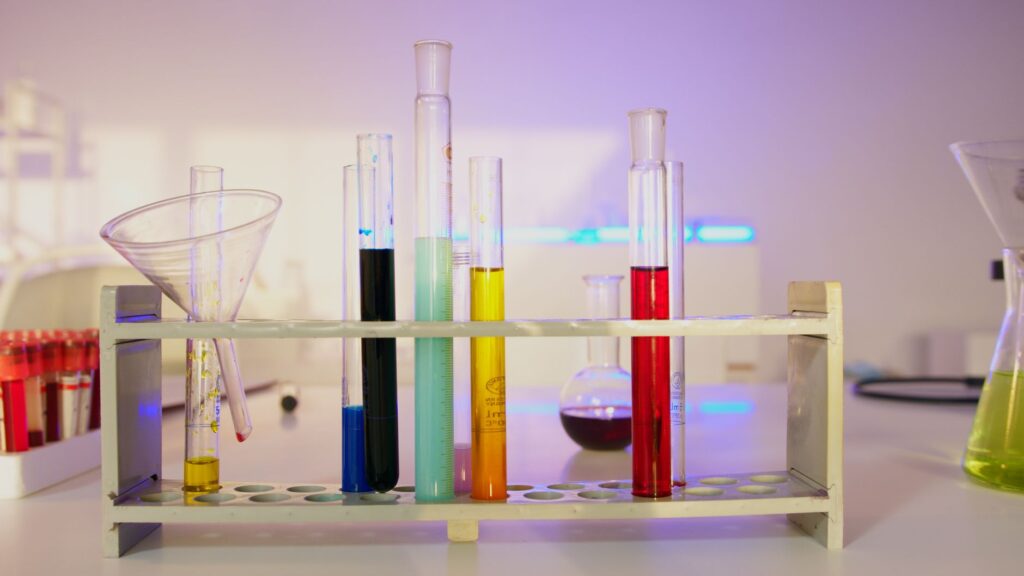
In this article you will explore the fundamental ideas behind green chemistry and learn how sustainable synthesis is reshaped by modern reaction design. We will walk through the twelve guiding principles, dissect atom‑efficient mechanisms, and examine real‑world applications that align with the NCERT Class 12 Chemistry syllabus.
Principles that Define Green Chemistry
Why a set of principles?
The twelve principles, first articulated by Paul Anastas and John Warner, serve as a checklist for chemists to minimize environmental impact while maintaining product quality. As Anastas put it, “Design chemicals that degrade after use” (Paul Anastas, 1998). Each principle addresses a specific source of waste or inefficiency.
Brief overview of the twelve principles
- Prevention: Avoid waste generation rather than treating it later.
- Atom Economy: Maximize incorporation of all reactant atoms into the final product (Atom economy).
- Less Hazardous Synthesis: Use non‑toxic reagents and conditions.
- Design for Energy Efficiency: Conduct reactions at ambient temperature and pressure when possible.
- Use of Renewable Feedstocks: Prefer biomass‑derived materials over petrochemicals.
- Reduce Derivatives: Skip protecting‑group steps that add extra reagents.
- Catalysis: Employ catalysts to lower activation barriers (Catalysis).
- Design for Degradation: Ensure products break down into innocuous substances after use.
- Real‑Time Analysis: Monitor reactions continuously to avoid over‑processing.
- Inherently Safer Chemistry: Choose solvents and reagents that pose minimal risk.
- Renewable Solvents: Replace volatile organic solvents with water, supercritical CO₂, or bio‑based solvents.
- Minimize Waste: Integrate reaction steps to reduce purification needs.
Sustainable Synthetic Strategies
Atom‑Economical Pathways
Traditional organic synthesis often relies on stoichiometric reagents that generate by‑products. In contrast, an atom‑economical route aims for a theoretical yield close to 100 %. For example, the synthesis of 1,4‑butanediol from succinic acid via hydrogenation incorporates every carbon atom of the starting material into the product, eliminating salts and acids.
Catalysis – the workhorse of green synthesis
Transition‑metal catalysts, organocatalysts, and enzymes enable reactions under milder conditions and with higher selectivity. Homogeneous catalysts such as palladium complexes facilitate cross‑coupling reactions, while heterogeneous catalysts can be recovered and reused, cutting down on metal waste.
Solvent Selection and Alternatives
Water is the ultimate green solvent, but not all reactions are water‑compatible. Alternatives include supercritical CO₂, ionic liquids, and bio‑derived solvents like ethyl lactate. The choice is guided by the principle of “Inherently Safer Chemistry”.
Energy‑Efficient Operations
Microwave‑assisted synthesis and flow chemistry reduce heating time and improve heat transfer. Conducting reactions at room temperature or using renewable energy sources aligns with the “Design for Energy Efficiency” principle.
Mechanistic Insights through Green Reactions
Case Study 1: Catalytic Hydrogenation
Hydrogenation of alkenes using a palladium on carbon (Pd/C) catalyst exemplifies a green process. The overall reaction is:
| Reactant | Product | By‑product |
|---|---|---|
| R‑CH=CH‑R′ + H₂ | R‑CH₂‑CH₂‑R′ | None (atom‑economical) |
The catalytic cycle involves adsorption of H₂, heterolytic cleavage to generate surface hydrides, and subsequent transfer to the alkene. No stoichiometric oxidants are needed, and the catalyst can be filtered and reused.
Case Study 2: Biocatalysis in Asymmetric Synthesis
Enzymes such as lipases catalyze esterifications in non‑aqueous media, delivering high enantioselectivity. For instance, the kinetic resolution of racemic ibuprofen using Candida antarctica lipase B (CALB) proceeds at 30 °C in tert‑butyl methyl ether, producing (S)-ibuprofen with >95 % ee and water as the only by‑product.
Case Study 3: Click Chemistry
The copper‑catalyzed azide‑alkyne cycloaddition (CuAAC) is a quintessential click reaction: it is high yielding, proceeds in water, and tolerates many functional groups. The mechanism involves copper(I) activation of the alkyne followed by cycloaddition with the azide, forming a 1,2,3‑triazole without generating waste.
Real‑World Applications of Green Synthesis
Pharmaceutical Manufacturing
Green routes have been adopted for blockbuster drugs. The synthesis of the antiviral oseltamivir (Tamiflu) now uses a biocatalytic step that replaces a hazardous organometallic reagent, cutting waste by 80 % (green synthesis in pharma).
Agricultural Chemicals
Glyphosate production has been revamped to use a solvent‑free, catalytic process that eliminates phosphorous‑containing waste streams. The new method improves atom economy from 45 % to 78 % and reduces energy consumption by 30 %.
Materials and Polymers
Poly(lactic acid) (PLA) is produced from fermented corn starch, a renewable feedstock. The polymerization employs a tin‑based catalyst that operates at 120 °C, far lower than the temperatures required for petrochemical‑based polymers.
Industrial Case Study: Supercritical CO₂ Extraction
Supercritical CO₂ serves as both a reaction medium and a solvent for extracting natural products. In the perfume industry, it replaces hexane, providing a non‑toxic, recyclable solvent that leaves no solvent residues.
Recent Advances and Future Directions
Flow Chemistry Meets Green Principles
Continuous flow reactors allow precise control over temperature, pressure, and residence time, reducing side‑product formation. Recent reports demonstrate the flow‑based synthesis of active pharmaceutical ingredients (APIs) with >95 % atom economy and minimal waste.
Photocatalysis Powered by Visible Light
Visible‑light photocatalysts such as eosin Y enable oxidation reactions without stoichiometric oxidants. The process uses sunlight or LEDs, aligning with the “Design for Energy Efficiency” principle.
Machine Learning for Reaction Optimization
Data‑driven models predict optimal green conditions—solvent, catalyst loading, temperature—accelerating the discovery of sustainable pathways. Early studies show a 20 % reduction in experimental runs compared to traditional trial‑and‑error.
Policy and Education
India’s National Green Chemistry Initiative encourages incorporation of green metrics in laboratory curricula. The NCERT textbooks now include sections on atom economy and safer solvents, ensuring that future chemists internalize these concepts from the start.
Important Questions for NEET and Boards
- Define green chemistry and list its twelve principles.
- Explain atom economy with a numerical example comparing a traditional Grignard reaction to a catalytic hydrogenation.
- Why is water considered the “greenest” solvent, and what are its limitations?
- Describe how a heterogeneous catalyst can be recovered and reused in a laboratory setting.
- Illustrate the mechanism of the copper‑catalyzed azide‑alkyne cycloaddition and state why it is classified as a click reaction.
- Calculate the atom economy for the synthesis of aspirin from salicylic acid and acetic anhydride.
- Compare traditional solvent‑based extraction with supercritical CO₂ extraction in terms of environmental impact.
- Discuss how flow chemistry improves safety and waste reduction for exothermic reactions.
- Identify two renewable feedstocks used in polymer production and explain their advantages.
- Critically evaluate the role of biocatalysis in asymmetric synthesis, citing a specific enzyme‑mediated example.
Frequently Asked Questions
What distinguishes green chemistry from sustainable chemistry?
Green chemistry focuses on designing chemical processes that reduce or eliminate hazardous substances, while sustainable chemistry extends the scope to include economic viability and societal impact over the entire product lifecycle.
How can I choose a greener solvent for a laboratory experiment?
Start by consulting the solvent selection guide: prioritize water, ethanol, or bio‑based solvents; avoid chlorinated solvents; assess toxicity, boiling point, and recyclability before finalizing.
Is a reaction with high yield automatically green?
No. Yield addresses efficiency but not waste generation, energy consumption, or toxicity. A reaction can have 99 % yield yet produce large amounts of hazardous by‑products, which would violate several green principles.
Can green chemistry be applied to inorganic synthesis?
Absolutely. Strategies such as solid‑state reactions, mechanochemistry, and the use of non‑toxic metal salts embody green principles in inorganic chemistry as well.
Key Takeaways
- Green chemistry is guided by twelve principles that aim to minimize waste, hazards, and energy use.
- Atom economy is a quantitative metric; higher values indicate greener routes.
- Catalysis, especially heterogeneous and biocatalysis, is central to sustainable synthesis.
- Choosing safer solvents—water, supercritical CO₂, or bio‑based alternatives—greatly reduces environmental impact.
- Modern technologies like flow chemistry, photocatalysis, and AI‑driven optimization accelerate the adoption of green processes.
- Real‑world examples from pharma, agrochemicals, and polymers demonstrate that green synthesis is commercially viable.
- Understanding and applying these concepts aligns with the NCERT Class 12 Chemistry syllabus and prepares you for NEET and future research.
Related Study Material from iBioKaare
- Advanced Insights into Microbes in Human Welfare: Beyond the NCERT
- Real‑time Oxygen Monitoring Shows Losses in Solar Water Splitting
- Ultrashort Laser Pulse Microscopy: Mapping Electron Interactions in Thin Materials
- Green Hydrogen Chemistry – Electrolysis of Water for Clean Fuel